Seeing perfection depicted online takes a toll—even if you know it’s not real.
It’s easy to find a pattern on social media apps like Instagram: meal plans that help you lose weight, outfit tips to hide “problem areas,” and beauty products that cover perceived flaws. Couple that with the fact that a large swath of photos and videos on social media have been altered by AI filters, promoting unrealistic beauty standards that are impossible to achieve off-screen—and it’s no wonder many teenagers struggle to love their bodies.
Seeing “perfection” depicted online takes a toll—even if you know it’s not real. This constant barrage of content seems to be a cumulative effort to make you hate your body, or at least become dissatisfied with its current state. Even when we quietly scroll through our feeds, the internet is loud.
From counting grams of protein and “biohacking” to semaglutide injections and crash dieting, there’s a lot of noise out there about what’s best for our bodies. How do we know which messages are helpful and which are harmful for us—and for our kids? And when does harmful messaging turn into harmful habits that affect mind and body alike?
This guide will help you discuss the following questions:
- How do today’s kids and teens feel about their bodies?
- Where does body shame come from?
- What is body image, and does talking about body positivity or body neutrality improve it?
- What is body dysmorphia? What are eating disorders? Are they connected?
- What should parents do if they suspect their child is struggling with either of these?
- How can parents foster a healthy view of bodies?
A quick note before we dive in: we at Axis are not mental health professionals, and cannot offer medical advice or treatment of any kind. Our goal is to come alongside parents with research and encouragement. If body image struggles or eating disorders are affecting your son or daughter, you’re not alone. If you believe that you or someone in your care is struggling with an eating disorder, we encourage you to seek professional help from a counselor, therapist, or doctor with the necessary skills and training to help you or your loved one heal and recover.

How do teens feel about their bodies?
The short answer? It depends. Children and teens tend to adopt the mentality they see modeled by family members, friends, and peers. The National Eating Disorders Association (NEDA) puts it this way: “Body image is something that all of us develop early in childhood as we start to become aware of our appearance and seek to gain social acceptance first from our caregivers, peers, and the wider society in which we live.”
Starting at a younger age than you might think, teens and children gather information from culture, peer groups, and parental influences to decide how to feel about their physical self. If they observe people who treat their bodies harshly or speak negatively about their own appearance, your child is more likely to adopt a negative view of themselves.
Physical appearance changes rapidly and frequently in the pubescent years. And while experts cannot pinpoint a cause, puberty’s arrival now comes sooner than it used to. As we all know, hormonal changes bring a flood of volatile emotions and sudden bodily changes in both boys and girls. Undergoing these changes before one’s peers can draw unwanted attention and make kids uncomfortable in their skin.
Today’s kids and teens are, in many ways, less uniform than any generation before. In other words, they’re not having the same collective experience. They can choose to watch any of the 600 scripted shows that air in any given year, and they’re afforded constant access to nearly every song ever recorded through apps like Spotify and Apple Music. This vast ocean of media consumption means teens aren’t all watching or listening to the same things, and different media influences create different perspectives.
No matter what they’re streaming, social media usage has a marked effect on body image for the next generation. A recent study by the American Psychological Association found that “teens and young adults who reduced their social media use by 50% for just a few weeks saw significant improvement in how they felt about both their weight and overall appearance compared with peers who maintained consistent levels of social media use.”
Does this mean online culture is primarily to blame? Should we ban all smartphones? Not necessarily—but being mindful of how being online affects your teen can help you notice any changes in the way they talk about themselves or treat their bodies.
Hormonal shifts, peer pressure, and media influence, oh my! This trifecta deeply affects how teens feel about their bodies. And while the adolescent years are a wild ride for everyone, some teens face a deeper level of difficulty. When they look in the mirror, they may see a version of their bodies that isn’t reflective of their physical selves in the real world. This is called body dysmorphic disorder, and it’s an important condition for parents to understand.

What is body dysmorphia?
Body dysmorphic disorder (BDD) focuses on the body, but it begins in the mind. This mental health condition causes fixation on perceived physical flaws. Affected kids and teens may feel like these perceived differences make them ugly or unattractive, spending a lot of time in front of the mirror trying to correct what they deem to be a problem.
Importantly, the “flaws” that loom so large in the mind of someone with BDD are typically nonexistent or extremely minor to those around them. This condition differs from someone who feels insecure because of a physical difference that is visible to others. Instead, someone with BDD believes something in spite of objective reality. They’re convinced that they’re unattractive because their veins show too much underneath their skin, their complexion is too fair or too dark, that they’re extremely obese despite what the number on the scale indicates, or that their mild acne makes them monstrous in the eyes of friends or classmates.
Marketing “perfection” has serious side effects
Body dysmorphia symptoms are most likely to appear between the ages of 11-20, making the teenage years a hotspot for negative physical fixation. Interestingly, teen girls are more likely to believe their arms, legs, stomach, or breasts are too big, while teen boys wrestle with feeling too small or not muscular enough.
Could differing messages for boys and girls cause these opposite reactions? Rachel Jones, a registered nurse, registered dietician, and child eating disorder specialist, sure thinks so:
Eating disorders and body image have historically been branded as a feminine issue, but that’s just not true. There’s a ton of pressure in society for all people to maintain a thin body, but it shows up differently. For women, it can look like trying to maintain an adolescent body, or at least remaining really lean and toned. But in boys, it’s marketed that being muscular or athletic equals being manly. Thinness is definitely in there, but it’s packaged differently.
Teen girls are encouraged by influencers to count calories, follow trendy diets, or replace meals with, say, “oatzempic,” which is an oat and water drink that suppresses appetite. For teen boys, male fitness influencers tout biohacking, bulking, and cutting weight as keys to achieving a fit, masculine look. These approaches have the same goal: alter your physical appearance to gain popularity, improve image, and feel better about yourself (something some teens refer to as “looksmaxxing”).
At minimum, this pressure to look perfect and meet societal standards can take a toll on a child’s mental health. In some cases, however, stress and other influencing factors can cause kids and teens to move past thoughts and into action. It’s time to talk about eating disorders.


What are eating disorders?
There’s no one single cause behind the development of an eating disorder; psychological, societal, and physical factors are all at play. No matter the cause, data shows that nearly 30 million Americans will be diagnosed with one at some point in their lives.
Commonly diagnosed eating disorders include:- Anorexia nervosa, which is characterized by weight loss or lack of weight gain in growing children due to food restriction and is often accompanied by distorted body image.
- Bulimia nervosa, which is characterized by cycles of binge eating and attempting to undo the effects of that binge, often by self-induced vomiting.
- Binge eating disorder, which is characterized by eating very quickly, eating when full, eating when not hungry, and eating alone to hide food intake from others.
- Avoidant/Restrictive Food Intake Disorder (ARFID), which is not related to body image like other eating disorders, but is characterized by “a lack of interest in eating or food, sensory sensitivity (e.g., strong reactions to taste, texture, smell of foods), and/or a fear of aversive consequences (e.g., of choking or vomiting).”
- Many other eating disorders do not fit strictly within the boundaries of one of these four named disorders, and may be classified as Other Specified Feeding or Eating Disorders (OSFED).
Are eating disorders always about food?
Eating disorders can stem from a variety of causes and triggers. Many people diagnosed with eating disorders can pinpoint the beginning of their troubles to a traumatic experience: bullying, sexual or emotional abuse, a breakup, their parents’ divorce, loss of a loved one, or moving to a new place. They often mention controlling their bodies as a way to cope with the intense emotional pain of that trauma, saying they can’t control anything else, but they can control food. Some do develop eating disorders because of a desire to be thin, but most often, a fixation on food develops because of an impulse to feel released from pain.
If you imagine a young person in the wake of—or right in the middle of—a traumatic experience, desperate for a sense of control and an escape, and add in a culture that conflates having a “perfect” body with perfect peace, it’s no wonder so many of our teens are experiencing disordered eating, boys and girls alike.
Women and girls are statistically more likely to be diagnosed with an eating disorder, but a new study has found that over 1 in 5 boys and men in Canada and the United States may now meet the diagnostic criteria for an eating disorder. So what’s causing eating disorders to tick upward in every demographic?
Why are eating disorders on the rise?
Dr. Jasmine Reese, director of the Adolescent and Young Adult Specialty Clinic at Johns Hopkins All Children’s, says she believes that the Covid-19 pandemic caused an uptick in media consumption, and that correlates with more eating disorder diagnoses: “Contributing factors include the isolation and increased stress during the pandemic leading to… unhealthy ways of dealing with stress. During that period, an increase in screen time and social media use led to a lot more focus on body image and body comparison.”
In Reese’s opinion, those media consumption habits are here to stay. “Almost all teens have access to social media whether on a phone or a computer. This means easy access to online content that may be glamorizing fad diets, weight loss or certain body types.”
Eating disorders vs. disordered eating
Eating disorders are characterized by severe and persistent symptoms and must be clinically diagnosed. To receive a diagnosis, individuals must meet specific criteria outlined in the Diagnostic and Statistical Manual of Mental Disorders (DSM-5 TR). But many kids, teens, and adults will struggle with disordered eating, even if they don’t meet the criteria for an official diagnosis.
In contrast, disordered eating habits live on a vast spectrum of unhelpful behaviors and thought patterns about food, eating, and body image. According to NEDA, “Disordered eating patterns can vary in severity but do not meet the frequency, duration and/or psychological criteria for a diagnosable eating disorder.” Common disordered eating behaviors can include:
- Dieting
- Skipping meals
- Fasting
- Food intake restriction
- Food or food group elimination
- Binge eating
- Excessive use of diuretics, laxatives
- Unnecessary use of weight loss medications
- “Compensating” behaviors like purging or excessive exercise
There’s nothing intrinsically wrong with following a dietary plan or counting calories and macros. But when those behaviors develop due to an unhealthy fixation on our bodies, we’re headed down a path that’s anything but healthy.
It’s important to take note of any of these behaviors in your child, especially if they happen on a regular basis. It’s wonderful to see your teenager work out to excel in the sport of their choice. But it’s troubling when they’re spending hours each day in the gym while commenting negatively on their bodies when they come home. Following hunger cues is good—no need to worry if your teen isn’t hungry on occasion. But if they’re consistently turning down meals, consider that something deeper may be at play. As parents, our nuanced thinking can potentially fill in the gaps in our kids’ ability to discern what’s best when it comes to food.
Remember biohacking and “oatzempic”? Aside from the fact that physical appearance can never truly satisfy our desire for a healthy self-image, these “life hacks” pose serious physical threats to growing bodies. The human brain typically doesn’t develop the ability to think abstractly until at least age 12, so children and teenagers aren’t able to parse through dieting information they find online or in documentaries the same way adults can.
According to Jones, “At these ages, they receive information as black and white without understanding the consequences of food elimination or restriction.” In her practice, she often encourages parents to “have your radar up and stay curious about what your kids are learning about food,” noting that this curiosity can help parental figures spot potential dietary gaps in their children’s eating habits before physical effects kick in.
To live and live well, we need regular nourishment and specific balances of food content to keep our bodies healthy. Of course, not eating at all is dangerous, but binge eating, restricted eating, and any other behavior that prevents us from receiving regular, well-rounded nourishment from food can cause deep damage to our bodies. This is never more true than during our kids’ developmental years.
Zoza Grace Spears, MD, who works as a pediatrician in South Carolina, agrees. She explains that kids hear a statement like “sugar is bad for you” and move to restrict or eliminate their sugar intake. “In reality, though, glucose is essential—especially for developing brains,” she says. “Without proper intake, we actually see evidence of brain atrophy.”
Following health advice that isn’t directly from health professionals can have serious repercussions for our kids. While it’s important to teach them how to identify sources they can trust and learn how to fuel their bodies well as they grow, there’s more to the story. Body dysmorphia, eating disorders, and body image issues don’t come solely from bad advice—but dissatisfaction with our bodies is the primary driver of developing and maintaining an eating disorder. It’s time to take a closer look at the concept of body image to see how deep things go.
What is body image?
The term “body image” covers a lot of ground, encompassing how we think and feel about our bodies as well as how we act toward them. When you talk about body image, you could be referring to what you think when you see yourself in the mirror, how you feel in your own skin, and/or what you believe about yourself because of your appearance.
If we’re honest with ourselves, none of us have a positive body image at all times. Our emotions and thoughts about our bodies change for countless reasons, from physical aging and hormonal shifts to comparing ourselves to others or getting unwelcome news from a doctor. Even the world’s most famous people aren’t immune to the struggle.
 In a press conference, actor Chris Pratt described his own physical fluctuation between his roles in Parks and Recreation and Guardians of the Galaxy—and the criticism that came with it. “It’s a vicious cycle and it’s a very real thing. I know what it’s like to have body image issues.” He continued his thoughts on Instagram: “Just because I am a male doesn’t mean I’m impervious to your whispers. Body shaming hurts.”
Body shaming does hurt. Just ask Taylor Swift. Despite being the pop icon of a generation, she voiced her pain in Miss Americana, a Netflix documentary about her life and career. When magazine covers suggested that she was pregnant or mentioned weight gain, she reacted by controlling her food intake. “That would just trigger me to just… stop eating. I would’ve defended it to anyone who said, ‘I’m concerned about you.’ I was like, ‘What are you talking about? Of course I eat. It’s perfectly normal. I just exercise a lot.’ And I did exercise a lot. But I wasn’t eating.”And if hearing criticism affects celebrities in this way, it must also affect our teens. With an end
less barrage of media influences, rapidly changing hormonal levels, and the stress of growing up in a complicated world, their own body image is sure to ebb and flow from time to time. How we see ourselves matters—and body image is deeply connected to identity. On some level, we define ourselves and others by our physical appearances. We
describe people first by their looks: “The new girl at work is tall and blonde” or, “He has freckles and curly hair, you can’t miss him!” And when we face physical setbacks, our sense of worth and identity is affected. In a study of UK residents, 47% of people with a long-term health condition reported feeling down or low as a result of their diagnosis.
This all points to the idea that if our bodies don’t look and feel a certain way, we’ve missed the mark. And this phenomenon is often directly connected to what we do with our wallets.
Consumerism and body image
Marketing is meant to sell consumers on products and services. Many times, marketing campaigns are designed to make us believe that what they’re selling will improve our lives. Couple that with the cultural idea that life is better in “the ideal body,” and it’s easy to see why we spend so much money on our physical appearances. And we do certainly spend money on enhancements—to the tune of nearly $12 billion on plastic surgery, $60 billion on dietary supplements, and more than $94 billion on beauty products each year.
 It’s upsetting to name the dark side of marketing out loud, but it’s true: if companies can make us believe we aren’t good enough or stir up shame in us, we’re infinitely more likely to spend in efforts of hitting an always-moving target. When you consider how many ads we see each day—experts guess it’s around 100—it’s no wonder that our children feel the pressure to look like what they see online. (Spoiler alert: the people you see in ads don’t usually look like that in real life.)
In almost every survey researched for this article, people with negative body image mentioned feeling “ashamed.” It’s an emotion that seems to be intrinsically attached to our self-worth, and has a powerful connection to eating disorders.
Where does body shame come from?
 Studies through The Body Project at Bradley University indicate that early puberty correlates with higher levels of depression and increased likelihood of eating disorders. This trend is often due to the sexualization of maturing bodies, particularly for young women. They often feel shame about their new figure, especially when they catch the opposite sex staring.
In a video published by Allure, girls between the ages of six and eighteen talk about how they feel about their bodies. It seems that by around age ten, each of them already feel some level of embarrassment or shame about their bodies, whether because of their own insecurities or because of comments from others.
This phenomenon isn’t exclusive to women and girls, of course. Men and boys encounter a social stigma around talking about body image and acknowledging that body image is a problem for them, leading them to internalize shame and process it alone—which might be why we hear about it less often.
And those in the LGBTQ+ community deal with body shame, too. Trans people commonly experience gender dysphoria, meaning they do not feel that their physical bodies correspond to their gender identities. These complex feelings can lead to higher rates of disordered eating. In fact, 9% of LGBTQ+ youth aged 13-24 have been clinically diagnosed with an eating disorder, and an additional 29% state that they suspect they have one even without an official diagnosis.
Dr. Jones corroborates this timeline, acknowledging that she has treated clients as young as ten years old with eating disorders. But in many cases, eating disorders aren’t treated until the effects are noticeable—and eating disorders don’t begin until body shame takes root. “Kids are disparaging their bodies way younger than we think,” she says. “We tend to notice the effects of this self-talk during the teenage years, but the habits are being formed much earlier than that.”
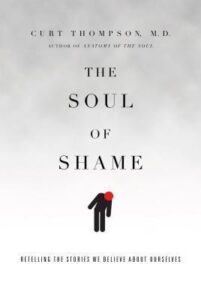
The Bradley University study and the Allure video both point to something significant—negative body image is rooted in shame. And while culture certainly can contribute to the noise, shame is a spiritual disease at its root. In his book The Soul of Shame, Dr. Curt Thompson says, “Researchers have described shame as a feeling that is deeply associated with a person’s sense of self, apart from any interactions with others; guilt, on the other hand, emerges as a result of something I have done that negatively affects someone else. Guilt is something I feel because I have done something bad. Shame is something I feel because I am bad.”
Interestingly, then, shame does not stem from our actions. We aren’t ashamed because we gained weight or skipped the gym or fell into restrictive dieting again. We’re ashamed because we think those things make us bad. Shame is about our identities.
Does the body positivity movement help?
If you’re not familiar with the body positivity movement, it’s a school of thought that aims to help people accept and celebrate all bodies just as they are, including one’s own. This acceptance, at least in theory, includes throwing off unrealistic norms surrounding weight, shape, gender, race, age, acne, body hair, cellulite, stretch marks, and even disorders or disabilities. The movement also advocates for more diversity in mainstream media, rather than a narrow spectrum of people who are considered attractive.
The body positivity movement has gained popularity with influencers and brands. Rising body positivity star @mayridts has an Instagram bio that reads, “The only beauty standards you should follow are your own,” and @laurenedgex frequently posts shots of her postpartum body in lingerie in attempts to normalize curvier bodies, especially for moms.
God created all bodies, not just the arbitrary “ideal” that our culture praises. It’s good that people in our society are speaking out about the fact that all people are valuable, no matter what they look like. But is this movement really fixing how we think about our bodies?
Jones doesn’t think so: “Body positivity is not very realistic because it assumes that you can have this unconditional positive regard toward your body at all times, and that’s just not in line with the human experience.” From simple “flaws” like bad hair days and unexpected zits to serious things like chronic illness or discomfort with the number we see on the scale, none of us are going to wake up celebrating our bodies every day.
Many believe body positivity is an imperfect step in the right direction, but critics see gaping holes in this strategy. For example, many of the influencers and ad campaigns that tout this theory feature curvy, voluptuous women who still fit many other traditional beauty standards. Is this truly helping every type of body feel celebrated, or is it just another type of standard to compare ourselves to?
Another critique of the body positivity movement: the efforts to “normalize all bodies” often feature women in bathing suits or lingerie. Some women may see a post and feel much better, recognizing similar physical features or a body shape that mirrors their own on the screen. Others see posts and feel discouraged, as though loving your body and being alluring or sexy are synonymous.
What about body neutrality?
Body neutrality approaches things differently. Instead of focusing on the “positives,” this way of thought asks us to let go of appearance as a benchmark entirely. It suggests that even if we can’t celebrate our bodies for how they look every day, perhaps we could simply stop thinking about them as “beautiful or not” so often.
 Body neutrality focuses on function over aesthetics, training us to see our bodies as vessels for living rather than a canvas to display in hopes of meeting societal ideals. Jocelyn Nelson, an LCPC at The Family Institute at Northwestern University, thinks it may be a more sustainable approach than body positivity. “Body positivity encourages us to move from negative to positive whereas body neutrality invites us to move from negative to neutral,” Nelson says. “There is a case to be made that the journey towards neutrality is more within reach and therefore, potentially more meaningful when it comes to improving our relationship with our bodies.”
Where body positivity may encourage someone to say, “I feel beautiful today,” body neutrality asks them to simply acknowledge, “My body is taking care of me. My lungs are helping me breathe, my muscles are helping me move, and my stomach is helping me get the nutrients I need.” Acknowledging and appreciating what our bodies can do may not help us love them every day, but it could help us move away from disparaging them, which is a great place to start.
For those who believe that all bodies are created in God’s image, body neutrality can serve as a helpful lead-in to connecting those spiritual beliefs to our daily thoughts about our physical selves. Jones emphasizes the importance of treating all people (including ourselves) with dignity and respect. “I may not feel good about my body today, but could I work toward respecting it? Could I give it dignity?” she asks.
But what does it even mean to give bodies respect and dignity? Simple acts can go a long way in building this perspective. As a thought experiment: if we saw someone thirsty on the side of the road and we had a water bottle, many of us would pass it through the car window to them without hesitation, because we know that humans need water. In the same way, Jones reminds us that we should notice what our bodies need and respond the way we would if we were trying to offer help to someone else.
Wearing clothes that feel comfortable on our current bodies (not the bodies we wish we had), getting enough sleep, and opting not to work out as a way to punish ourselves all contribute to self-dignity and respect. This approach goes past feeling positively or even neutral. It asks us to treat ourselves with the biblical principles that Christians believe.
A better answer: the biblical perspective on body image
How to talk about body image with your teen
In the 2018 movie Dumplin’, a plus-sized girl named Willowdean tries to figure out how to navigate her teen years as the daughter of a former pageant queen. In fact, the moniker Dumplin’ came from her mom, who deemed it a “silly little nickname.” As we see in the movie, though, the implications aren’t silly at all. Willowdean works hard to accept her body despite her mother’s negative implications—and while she ultimately overturns the notion that pageant queens must have a certain body type (we all love a happy ending!), it’s clear that the parent-child conversations about bodies hurt more than they helped along the way.
How we speak to our kids about their bodies—and our own—matter immensely. How we treat ourselves matters just as much. We are the ones who teach our children how to eat, and we model for them what kind of relationship they should have with their bodies. Issues we might have with our own appearances directly impact our kids. If we model unhealthy attitudes about eating, that’s what they will likely default to. It’s a heavy responsibility.
This means that the way we handle and talk about food as parents matters just as much as, if not more than, what we directly say to our children about body image. Before lecturing your kids on food and body image, Jones says, “Go first in the way you treat and discuss your own body. Do you treat it with respect and dignity? Does diet culture affect your lens? Are you talking negatively about your own body or others’?”
Spears agrees, saying, “For kids, healthy and disordered eating habits are both formed by the modeled behavior they see on a regular basis.” When she needs to talk to a child or teen in her pediatric practice about increasing movement or eating more nutritious foods, she discusses future aspirations instead of body weight. “I always ask them what they want to be when they grow up,” she says. “If a child says they want to be a firefighter, I say, ‘Wow, that’s cool! Firefighters move around a lot and need lots of protein and carbs to keep their muscles strong.’”
Jones emphasizes that weight conversations about your kids, whether about gaining or losing it, should never take place in front of them. If you’re concerned they’re losing weight, ask them about how they feel and what their eating habits are these days instead of telling them they “look too skinny.” If you’re concerned they’re overweight, consult your pediatrician when your teen is not in the room. In conversations with your child, discuss the importance of moving our bodies and fueling them well: it’s good for our mental health, it keeps our joints healthy for decades to come, and it honors the way God made us.
Better language has big implications
If our bodies didn’t matter, God wouldn’t have given us bodies. But He did. And He also gave us the ability to appreciate them. So we need to be careful not to ignore our bodies, but we also need to change the way we talk about them—our own and everyone else’s. We often say things like “You look beautiful!” “He’s the most attractive man in the world.” “If only I could have a body like that.” “If only he would take care of himself, he could be decent looking!” and “She let herself go.” Let’s briefly discuss each of these statements.
- “You look beautiful!” Even though we may be well-intentioned, telling someone they look beautiful is very different than telling someone they are beautiful. It’s affirming solely their outward appearance, rather than who they are. Consider instead, “You are beautiful”—offered in lots of different contexts.
- “He’s the most attractive man in the world.” We are so quick to compare one person’s appearance to another’s. Yes, God made us to experience attraction and have appropriate sexual desire when the time is right, but comparing our attractiveness is not what God intended. One person’s attractiveness does not somehow diminish anyone else’s. We are not in competition with one another for the title of “sexiest man/woman alive,” no matter what society says. Consider instead, “They really impress me,” or “That person is magnetic.”
- “If only I could have a body like that.” Why? What lies are we believing if we think that looking like someone else will somehow fix our problems? In fact, stereotypically attractive people still have insecurities. We all still face the same responsibilities and struggles. A “better body” won’t fix your life—it’s your perspective that needs a shift. Consider instead, “I’d love to get stronger,” or even, “Being healthy enough to be with my family is a gift.”
- “If only he would take care of himself, he could be decent looking!” and “She let herself go.” Should being attractive be our only reason for taking care of ourselves? Of course not. Taking care of our bodies should be an act of dignity and care, not a looks competition. And are we really in a position to judge whether someone has “let themselves go”? We often have no idea of the circumstances behind someone’s changing appearance. With statements like these, we judge others unnecessarily. These comments teach our kids that it’s okay to judge not only how others look, but also why they look that way. Consider instead: “She looks different lately, I should check in and see how she’s doing.”
Clearly, our words can be hurtful even when we don’t intend for them to be. Some other things that might be more helpful to say are:
- “I love [physical or character trait] about you.”
- “He’s so attractive to me because [list both physical qualities and character traits you appreciate].”
- “I want to emulate her [dedication, joy, perseverance, or other qualities you’d like to grow in yourself].”
- “I want to [insert activity goal here, such as work out four times a week, train for a 5k, or hike a certain mountain].” (This is instead of, “I need to lose twenty pounds.”)
Worried about saying the wrong thing? Remember that deciding not to comment on other people’s bodies at all is always an available option.
Does changing our behavior and our conversations really make that much of a difference? Yes, as it turns out—for our kids and for ourselves. Changing our thought patterns will take a lot of effort at first, but over time, it will literally rewire our brains.
Dr. Thompson puts it beautifully: “Those neurons that fire together wire together. In essence, the more we practice activating particular neural networks, the more easily they are to activate, and the more permanent they become in the brain.”
In his epistle to the church in Rome, the Apostle Paul suggests that renewal is possible:
I urge you, brothers and sisters, in view of God’s mercy, to offer your bodies as a living sacrifice, holy and pleasing to God—this is your true and proper worship. Do not conform to the pattern of this world, but be transformed by the renewing of your mind. Then you will be able to test and approve what God’s will is—his good, pleasing, and perfect will. (Romans 12:1-2)
It is fair to say that although Paul was not a neuroscientist, he refers here to what we now see through the lens of neuroplasticity. Renewal of the mind, therefore, is not just an abstract concept. It means real change in real bodies.”
It will take time, effort, and perhaps even professional help to see these changes come to fruition, but the road to healing is worth walking down, no matter how bumpy it gets.
What to do if you think your child may have an eating disorder
 Seeing your child or teen struggle with food can be painful. Some disorders have physical manifestations (someone with anorexia nervosa can experience extreme visible weight loss over time), but others aren’t as obvious (someone with a binge eating disorder may not look different physically, but their psychological relationship with eating is equally destructive to their well-being). Parents should take some time to familiarize themselves with the signs and symptoms of different disorders. The Eating Recovery Center and the National Eating Disorders Association have statistics and resources on each type of eating disorder that you may find helpful.
Monitoring online activities may also be revealing. A teen who feels isolated will likely look for help online—sometimes from an eating disorder community, but more commonly in diet how-tos, quick weight-loss tips, apps that track nutrients, or questions about why they feel the way they do and how to stop.
Sometimes, the best way to really know how your teen is doing is to ask them, but carefully consider this option through prayer. On the one hand, it may help them break the isolation, secrecy, and shame if you offer them a loving and safe environment in which to admit their struggles. On the other hand, they may not be ready yet to confront the issue or admit there is a problem, so asking about the concern could be premature.
A good way to split the difference might be to approach the issue from a distance, asking with graciousness and curiosity about how your teen sees body image issues represented online, or how their friends talk about them. Sometimes it’s easier to talk about a generalized problem than our own issues, but it doesn’t make those conversations any less revealing. In any case, drawing attention to your child’s eating patterns, weight loss or gain, or the time they spend on their appearance in a way that makes them feel like they’re under a spotlight may cause them to withdraw than open up, so always approach these conversations with sensitivity.
If you are concerned that your teen has an eating disorder, reach out to a professional who can walk you through the process of evaluation and a potential diagnosis. They can also provide guidance if your child is in danger due to their eating disorder, but isn’t yet willing to address it. If your child is diagnosed with an eating disorder, it is crucial that you speak to an expert about how best to help them. Eating disorders require specialized care from a person or organization with expertise, be that a treatment center, a doctor, a nutritionist, a therapist, or some combination of the above.
Eating disorders often arise from trauma, and the behaviors associated with them can feel compulsory or necessary to those struggling with them. When you confront an unhealthy relationship with food or exercise without addressing what lies beneath, you may miss the point altogether—or, at worst, compound the underlying issues and push your teen further into destructive behaviors. It is essential that a young person with an eating disorder be treated competently, compassionately, and quickly by a professional.
Often a teen with an eating disorder will not want to admit that they have a problem. Not unlike someone struggling with substance abuse—which has many symptoms in common with eating disorders—confronting the ways your relationship with food is hurting you includes trying to change, and if a teen is deep in an eating disorder, then “change” sounds like “catastrophe.”
Some teens may push back against any attempt to get them help, and this could potentially be a painful time in your parenting journey, especially if you have to take the step of getting life-saving eating disorder care for a teen who doesn’t want it. It might be helpful for you to seek professional help as a parent during this time, so someone with expertise can support you as you support your teen. God often expresses His healing through the gifting and skill of those who have studied to care for the human body and mind.
No matter who else walks with you on this journey with your teen, no one can replace you as their parent, so it’s also important to make sure that you are well-equipped to care for them as they seek healing, whether from a diagnosed eating disorder or from the still-difficult patterns of unhealthy eating and body image it’s so easy to develop. Here are some key things we as parents can do for our kids to help them along the way:
Pray. First and foremost, any teen struggling with something that disrupts their flourishing needs to be covered in prayer. As parents, prayer is the most important work we do. Only God knows all the different facets of a person’s struggles, and only He is powerful enough and gentle enough to heal and restore them. If your teen is willing, pray with them, carrying their plight to God as Jesus carries our plights to the Father. If your teen isn’t interested in praying, continue to intercede on their behalf. God is our heavenly parent, and so there is no one who knows better what it is like to love a child in pain. He listens and empathizes with all we say, and He loves them even more than we do.
Create a safe environment. Eating disorders can come with a feeling of being different, unaccepted, unsafe, or isolated. People suffering from eating disorders often feel shame, guilt, and self-hatred both when they do and when they don’t act out of their disorder. Parents can fight this by making their home and relationship with their child a safe place to talk through feelings, incidents, fears, insecurities, and relapses without fear of repercussions. Establish a no-shame ground rule, assuring your teen that they can tell you anything they need to, even if they think you don’t want to hear it. Problems can’t be solved in the dark. It’s only in the light that we find freedom.
Examine your own behavior. Take time to think about what you model to your child, and repent and ask God to forgive you for any unhealthy patterns. Repent to your child and ask them to forgive you as well. Disordered eating tends to be generational, so your conversation with your teen might involve discussing the ways you were taught about eating when you were growing up. If this direct angle feels uncomfortable, consider asking them about how they would parent their own children in this area. This frames the conversation in a positive light and can help both of you brainstorm ways to create a healthy, loving environment around eating in your home.
Limit social media access. Making this choice requires great wisdom and insight. Especially if you have a younger child, restricting their device and internet time may be necessary to keep harmful influences at bay. Some children may not recognize that they need to establish limits for their mental health, and some haven’t learned how much the images they absorb can affect them. For a teen who is struggling with an eating disorder, it’s important to assess if and how the internet has played into that, and make a plan for how to keep them safe. If you do go this route, always explain why you’re setting certain boundaries, and keep the door open for discussion. Restrictions without explanations may be perceived as controlling and mean-spirited rather than loving and protective. For a more comprehensive discussion on how to do this well, check out the Parent’s Guide to Smartphones and the Parent’s Guide to TikTok.
Ground yourself in Scripture. If your child is willing, take time to search Scripture together for God’s truth about our identity, worth, and value as children of God. Create a list of passages that you can pray together and over your child when they are struggling. If your child is not open to this, we still encourage you to do this for yourself so you can use Scripture to guide your prayers. Never use the Bible to condemn your child or compound their shame and feelings of not being good enough. Instead, search through Scripture for words of life, light, and love from our God who sings over us. They aren’t hard to find.
Fostering a healthy view of bodies
Whether your child is struggling with eating habits and body image or not, we can all work to make our homes places of safety and healing—places where our kids grow firm in their identity as a child who is loved by God and by us. Here are a few practical tips to help you walk through this aspect of parenting.
Ask God for help and healing. Many of us have internalized disordered eating habits and body negativity without even realizing it. Ask God to show you any unhealthy patterns, in thought or action, that have become second nature to you. Ask him to heal you so that you can break generational habits and help your kids heal, too. If you discover that you need help, there’s no shame in talking about these things with your own doctor or therapist. In doing so, you might show your children the path to freedom.
Focus on respect, dignity, and identity. Setting aside unhelpful talk about bodies in your own home goes further than you can imagine. By centering conversations around how to treat ourselves and others as though we are made in the image of God—which we are!—we can stop negative body image before it starts, or at least give our kids truth to hold onto when culture or the internet tries to tell them otherwise.
Give your kids autonomy. Spears reminds parents often, “Don’t force your kids to clean their plate; let them stop when they’re full. If they do clean their plate and ask for more, wait 10 minutes before serving seconds.” Both of these help children understand their own hunger and fullness cues, and help to give them the gift of autonomy. When kids have appropriate levels of control around food intake, they may not feel the need to grasp for food control in unhealthy ways.
As we come to the end of this guide, we invite you to reflect on Galatians 5:1, which says, “It was for freedom that Christ set us free; therefore keep standing firm and do not be subject again to a yoke of slavery.” Let us find freedom for ourselves, for our kids, and for the generations that will follow.
Reflection Questions
-
What body image messages have you internalized from your parents, pop culture, and social media?
-
Have any of your thoughts about body image changed since reading this guide?
-
How would you like your teens to feel about their bodies? How can you cultivate that environment in your family?
-
Have you noticed any changes in your teen’s body image perception due to social media? Their friend group? Hormonal shifts and puberty?
-
Do you have any concerns about your teen’s eating habits and beliefs? How can you take a step toward addressing them?
-
How can you allow God’s truth to shape your views on body image?
Sources
-
AiPono.com
What If My Teen Doesn't Want To Go To Eating Disorder Treatment? -
American Psychiatric Association
What is Gender Dysphoria? -
American Psychological Association
Reducing social media use significantly improves body image in teens, young adults -
AnMed
Zoza G Spears, MD -
Bark.us
https://www.bark.us/blog/social-media-eating-disorders-tiktok/ -
BBC
5 male stars who have opened up about their body image struggles -
Bradley University
The Body Project -
TheDrum.com
How many ads do we really see in a day? Spoiler: it’s not 10,000 -
Eating Recovery Center
Eating Disorder Statistics -
EurekaAlert!
New research reveals one in five boys and men may meet criteria for an eating disorder -
The Family Institute of Northwestern University
Body Neutrality vs. Body Positivity -
Forbes
How The Beauty Industry Shapes The US Economy -
Harvard
Social & Economic Cost of Eating Disorders in the United States -
Health & Kindness
About -
John Hopkins Medicine
Eating Disorders Among Kids are on the Rise -
HuffPost
https://www.huffpost.com/entry/male-body-image-problems_n_55d538fde4b07addcb458638 -
Mayo Clinic
Body dysmorphic disorder -
Mental Health Foundation
Body image and long-term health conditions -
Modern Aesthetics
Annual Aesthetic Society Survey -
The National Eating Disorders Association (NEDA)
Body Image and Eating Disorders -
National Library of Medicine
https://pubmed.ncbi.nlm.nih.gov/ -
NEDA
https://www.nationaleatingdisorders.org -
New York Times
Hollywood Made 14% Fewer Shows in 2023 -
New York Times
Puberty Starts Earlier Than It Used To. No One Knows Why -
News Medical
The Truth About Biohacking -
Parents.com
'Oatzempic' Isn't Just a Social Media Trend -
Physiopedia
Body Dysmorphic Disorder -
PLOS One
Negative body image: Relationships with heightened disgust propensity, disgust sensitivity, and self-directed disgust -
The Trevor Project
Eating Disorders among LGBTQ Youth