"We’re corrupt in a good way."
Game on
Love ‘em or hate ‘em, in today’s media-saturated world, video games are ubiquitous. According to Pew Research Center, 85% of teens are playing video games, with 41% playing daily. It’s not just a thing for boys anymore, either; nearly all teen boys (97%) say they play video games, but 73% of girls also say they play video games. The rise of live-streaming platforms like Twitch has also led to billions of hours of gaming streams being watched online every month.
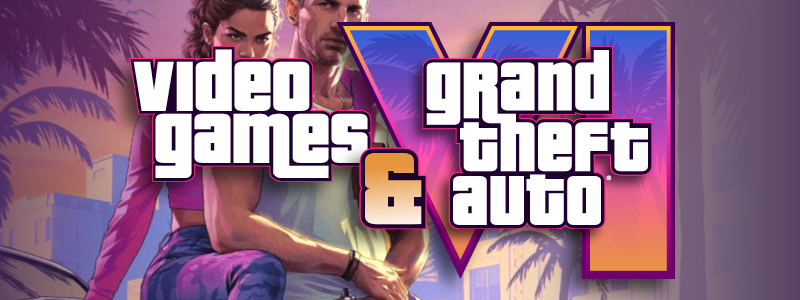
Today’s games have exploded from pixels with simplistic goals to intricately animated universes with full musical scores, A-list voiceover talent, and vastly more complicated objectives. A prime example of this is the upcoming game GTA VI. GTA V, the previous installment of the GTA (short for Grand Theft Auto) franchise from video game company Rockstar Games, is the second-highest-selling video game of all time (second only to Minecraft), with an estimated revenue of over $10 billion. While it’s too soon to say if GTA VI will outsell its predecessor, the hype is real, with people already taking off work to play when it drops.
The quote kicking this guide off perfectly sums up the GTA experience: committing crimes and engaging in debauchery to help the characters “win” in the story. But even as a video game meant for entertainment, is it possible to enjoy the corruption in a “good way”?
This guide will discuss GTA VI, as well as how teens are thinking about video games in general, to help answer that question for you and your teen.
We got this Parent Guide before GTA VI
It’s been 13+ years since GTA V came out, and the long wait hasn’t gone unnoticed. Open the comments on any social media post announcing something new or unique, and you’re likely to find one that says “we got ____ before GTA VI.” To put it in perspective, since the last GTA game released, we’ve had:
- Four presidential terms
- The COVID-19 pandemic
- Two generations of new video game consoles
- Eight original and four re-recorded Taylor Swift albums
- 31 Marvel movies
- Three returns of the McRib
And the list goes on. The teen in your life may not even remember when GTA V came out. Even if that’s the case, it’s almost a guarantee that they’ve at least heard of GTA VI—and if your teen is a gamer, there’s a good chance that they want to check out all that Vice City (one of the main locations in the game) has to offer.

What do we know about GTA VI already?
Until the full game releases, we won’t know for sure what all the game includes. But thanks to various announcements, trailers, and leaks, here’s what we know so far about GTA VI:
The Basics
- The game comes out November 19th on PlayStation 5 and Xbox Series XS.
- It costs $79.99 for the standard version, and $99.99 for the Ultimate Edition, which features exclusive vehicles, weapons, character outfits, and missions along with the standard game.
- The game is rated M for Mature, featuring Blood and Gore, Intense Violence, Mature Humor, Nudity, Strong Language, Strong Sexual Content, and Use of Drugs and Alcohol. It also features In-App Purchases.
The Gameplay
- GTA VI is a single-player story-based game and, as of the time of release, has no online features.
- While we don’t know specifics yet, past GTA titles tell us that the primary objective of this game will revolve around committing various crimes.
- There are no settings to disable/censor things like blood, language, and nudity.
- GTA games have a “Wanted” level as you play, indicated by 1-6 stars displayed on the corner of the screen. Getting caught committing a crime causes the star meter to appear, and police start chasing you. The more crime you commit while being chased, the more stars you get and the more police chase you. Evading police successfully will cancel your star meter, and then you can freely roam in the game again.
- Traditionally, if you die in GTA, you will immediately respawn at the nearest hospital or police station from where you died.
The Characters
- Players switch between two main protagonists, Jason Duval and Lucia Caminos. They are a criminal couple who, after a failed bank heist, uncover a conspiracy they must protect each other from.
- Other confirmed prominent characters include criminals, rappers, businessmen, and friends of Jason and Lucia. Players must interact with these characters to make progress in the main storyline.
- GTA VI introduces “real-life” character mechanics like managing what you eat, how much you exercise, how often you sleep, and nurturing the bond between Jason and Lucia, including being able to choose whether the relationship will be romantic or strictly professional. These choices affect how your protagonists look, perform, and interact with each other throughout the game.
- GTA VI also introduces a new “reputation system” where the game tracks whether you keep crimes “professional” or if you commit unnecessary violence along the way. How you play affects how other characters in the game treat you.
The Setting
- Takes place in “Leonida,” a fictional state based on Florida.
- The game’s map features 6 distinct areas based on real places like Miami, the Everglades, and the Florida Keys.
- GTA VI will have the largest, most detailed map of any Rockstar title, even including a weather system similar to Florida’s.
- Outside the main story, players can spend an unlimited amount of time exploring every area on the map, talking to characters, going into shops and other buildings, and completing side missions.
The Activities
As part of the open-world setting of the game, GTA VI will have a multitude of activities players can do as Jason or Lucia outside of the main/side missions.
Some confirmed activities include:
- Gambling
- Fishing
- Basketball
- Kayaking
- Mini golf
- Nightclubbing (including going to strip clubs)
- Playing pool
- Watching TV
- Tanning
Why does my teen want to play GTA VI?
You may be surprised that a game full of crime, violence, sex, and other dangerous activities is likely to be so popular with teens. How is a game named after a real-life felony one of the most talked-about things right now?
The Hype
Rockstar Games is good at making successful video games. Their games have won 39 collective “Game of the Year” awards across various award shows. It’s been eight years since their last big game, the critically acclaimed Red Dead Redemption II, and gaming fans are eager to see what Rockstar has to offer next in the GTA universe. Whether your teen hopes to play or not, GTA VI is going to be unavoidable when it drops. Friends, peers, influencers, streamers, and the internet as a whole will be talking about/playing it, and your teen may not want to feel “left out” of the conversations.
The Scope
This is going to be a huge game. The map, missions, open-world activities… GTA VI will have so much to do. And with new features that provide in-game consequences based on how you eat, sleep, work out, and treat the game’s non-playable characters (NPCs), GTA VI may feel more like a “real life” simulation (somewhat à la Ready
Player One) than previous games in the series. Rockstar Games’ team members have talked about how GTA VI has fully fleshed out news cycles, social media feeds, and culture unique to the game and its characters’ stories. This full-scale immersion can be appealing to teens who want a risk-free chance to live a much more luxurious, exciting, complex, and dangerous lifestyle within the game.
Even if these reasons are valid to be excited for GTA VI, there are other things we know about the game that raise some red flags. Later in this guide, we’ll provide a framework you can use to evaluate any video game, with GTA VI as an example. But for now, let’s step out of Vice City and talk about video games as a whole. Because even if your teen has zero interest in GTA VI, video games may still be a huge part of their life.
Why do teens love video games?
There are many different reasons teens may enjoy playing video games. Statistically, teens list fun/entertainment (87%), spending time with others (32%), competing against others (27%), and learning new things (13%) as “major reasons” they enjoy video games. In regard to the social aspect, 89% say they play video games with others, with 47% saying they’ve made a friend online because of a video game. No matter the reason, gaming as a whole is a way for teens to “blow off steam” in the midst of homework, complicated friend dynamics, family weirdness, bullying, chores, picking colleges, choosing career paths, getting jobs, etc.
Many teens also love video games for their narrative element. A lot of video games now are immersive experiences that invite players into a dynamic, complex storyline where they get to play a part in how the story unfolds. Unlike movies or books where you experience a story from the outside, video games allow you to become someone else and experience a unique story as that character. With cutting-edge graphics, audio, gameplay, and even legendary authors assisting with the lore and world-building for games, video games of all kinds make teens feel as if they aren’t just watching a story unfold; they are actively participating in it.
When playing with other people online, teens can talk, text, make new friends, work together to form team strategies, and scratch their competitive itch. And with the explosion of esports, some can even turn what was once considered a mind-numbing time waster into a lucrative career.

What gaming terms/slang should I know?
In order to talk with your gamers about what they love (or to know when to be concerned by something you overhear while they’re playing), it helps to know a few terms. Of course, there are many other terms that aren’t listed here, but we hope this brief glossary is a helpful start.
Bots: A computer-controlled character that plays alongside real players in multiplayer games. If you’re bad at a game, you may be teasingly called a bot by other players.
Emotes: Short gestures you can make your character perform, such as waving, dancing, or pointing.
FPS: “First Person Shooter,” a type of game where you play from a first-person perspective and use weapons to take out other players (examples: Fortnite, Valorant, and Call of Duty). GG (or GGs): “Good game,” often typed in an online chat after a match.
KDR: “Kill/death ratio,” a statistic that measures how many times you’ve killed other characters versus how many times you yourself have died. In FPS games, this is generally used to determine your skill level.
NPC: “Non-playable character,” the characters in a game that you can’t control. Think “extras” in a movie. (Calling someone an NPC in real life means that they appear to be on autopilot, or that they lack critical thinking skills.)
OP: “Overpowered,” usually talking about a character or weapon with so much power that it feels unfair to use it or play as/against it. You as the player could also be OP if you’ve spent enough time leveling up your character.
Ragequit: Abruptly quitting a game or match because of anger or frustration, often because you are constantly losing.
Smurf (or Smurfing): An experienced player who creates an alternate account to join a game and play against less-experienced players, usually beating them easily.
Trolling (or Griefing): Intentionally annoying, disrupting, or provoking other players for the sake of one’s own entertainment.
What are the main pros and cons of video games?
Studies show that moderate gaming can improve hand-eye coordination, memory, critical thinking, problem solving, creativity, imagination, social connection, impulse control, stress relief, emotional resilience, and cognitive performance as a whole. Many games also take place in historically accurate times and places, which can pique the interest of teens who normally couldn’t be bothered to read a history book. Video games can be a great vessel for learning, exploring, and processing life and the world.
Video games are designed to light up our brains’ reward centers by offering continuous challenges, giving a little hit of dopamine with every success. If we aren’t careful, this can result in impulsiveness, impatience, and irritability when gaming is interrupted. Given the fact that some games allow in-app purchases, and given the hit of dopamine that can come from unlocking something new in a game, some teens may be tempted to make multiple purchases without thinking about how much they’re actually spending.
In games with online chat, gaming has the risk of largely unregulated conversation and behavior. Vulgar language, scamming, and online predatory behavior are all risks when gaming with strangers. You may want to encourage your teen to report players who continuously use inappropriate language in chat. Remind your teen to avoid clicking links sent in chat, and to never reveal personal information about themselves or your family to anyone online. They should never arrange to meet someone in-person who they first met online, unless there is a trusted adult present.
While the longtime question of “does violence/sex/drugs in video games cause those behaviors in real life?” remains largely unresolved, these things undoubtedly play a part in forming and shaping our imaginations, which we carry with us into the rest of our lives. What we spend our attention on shapes who we become—so
it’s not just about figuring out whether video game use will escalate into a life of crime or promiscuity, but also about whether playing excessively is actually good stewardship of our time on earth.
How can I keep my teen’s gaming healthy?
Take an interest.
Show your teen you care about their interests and teach them self-regulation at the same time by watching, learning, and growing alongside them.
You can search for most game titles on YouTube and watch sample gameplay. Ask your teen to explain their favorite game to you while you watch: What do you like about this game? How does playing this game make you feel?Do you relate to this character? Who in your group of friends is the best at this game and why?
Model healthy online habits.
Teens are hypersensitive to hypocrisy. We cannot set a standard for them that we won’t follow ourselves. Setting up consistent rules for ourselves and our families will show our teens that we mean what we say.
Encourage your family to prioritize face-to face communication wherever possible. Set up times and spaces where games and devices don’t enter, and protect them.
Explore topics related to the games they enjoy.
If your teen enjoys a game with a significant historical or cultural context (say, a setting in World War II or involving characters from Greek mythology), go to a museum displaying WWII-era relics or find a great book about Mount Olympus. If your teen enjoys sports-related games, take them to a real game, or buy some gear and learn to play it in your yard. Talk about how the real thing compares to the way the game portrays it.
Learn to play the game with your teen.
Ask your teen to teach you how to play, and then let them humiliate you at first. Then, keep practicing. Ask for tips and advice. And then watch what happens when you finally do well at your teen’s favorite video game.
When should I start worrying?
While video games can be a stress-reliever for the daily weirdness of growing up, they can’t substitute for the development of real coping skills. Ensure your teen isn’t using gaming to avoid properly dealing with what’s bothering them, whether that be bullying, difficulty making friends, discipline problems at school, or even a mood disorder like anxiety or depression.
Stronger intervention or limits may also be in order if your teen:
- Becomes distracted or irritable when they aren’t playing, or talk exclusively about gaming.
- Plays in secret, lies about their gaming time, or makes excuses to play longer.
- Shows an increase in aggression or quotes offensive lines from a game or fellow gamer.
- Displays a lack of control, i.e., intends to play for 20 minutes but plays for hours.
- Neglects things like friendships, family gatherings, homework, hygiene, or other important parts of their lives.
- Spends a majority of their money on games or continually adds upgrades and downloadable content to games they own.
- Seems unconcerned/defensive about people in their life who feel ignored or left out.
How should I handle unhealthy gaming?
It’s easy to fall into unhealthy habits with games. They’re designed to be addictive. So how can we help our teens stay grounded rather than letting gaming consume them?
The first step involves understanding and empathy. Video games offer a version of life where every problem has a solution that can be reached in a handful of hours. As with many addictive behaviors, video game addiction can often arise as a symptom of deeper problems—loneliness, a feeling of dissatisfaction, a feeling of purposelessness, etc.
It’s important not to make your teen feel attacked or devalued when you broach the topic of their habit. Ease into it. Express interest and show them that you care about them and, by extension, the things they care about. With that foundation, you can start having conversations about what the habit is doing to them, and how they may be able to regain control without abandoning something they love. (Although sometimes, abandoning something altogether can be easier than trying to develop the ability to practice moderation.)

How should I evaluate if a video game is right for my teen?
An easy first step in evaluating a video game is looking at its official ESRB rating. From this, you can determine a game’s recommended age-appropriateness, content that may be of concern, and any included online features. We recommend using their ratings as a baseline, then doing further research on your own.
While we can’t give you a perfect guide for determining if something is right or wrong for your teen/family (every teen/family is different!), we can look to Scripture and what it says about what we should fill our time and mind with.
Let’s use Philippians 4:8 as a framework to evaluate if a video game is right for your teen. We’ll use GTA VI as an example to weigh the pros and cons of the criteria we find from this verse.
Is this video game…
True: In alignment with reality and God’s objective truth?
GTA VI: The fictional story can communicate truths about loyalty, consequences, and human nature. It will probably also depict what is “true” about what happens when violent, greedy criminals try to get their way in the world. But given the fact that the game also offers players multiple chances to commit egregious crimes with no lasting consequences, it could also be argued that the game presents a distortion of reality.
Just: Righteous, ethically sound, and in alignment with God’s standards of justice?
GTA VI: Even with the “Wanted” system adding consequences for committing crime, the game primarily and obviously rewards players for killing, stealing, and harming others rather than trying to be a good citizen.
Honorable: Dignified, respectable, and worthy of reverence?
GTA VI: The game’s “reputation system” may be able to incentivize more “honorable” in-game behavior, in the sense of completing missions without needlessly killing bystanders and destroying property. But the overall criminal lifestyle of the characters in this game generally revolves around what most would deem dishonorable behavior.
Pure: Morally clean and free from sexual corruption?
GTA VI: The ESRB rating of “M” alone tells us that the nudity, strong sexual/drug/alcohol content, and mature humor in the game directly goes against the Biblical standard of purity.
Lovely: Beautiful, pleasing, gracious, and worthy of love?
GTA VI: The massive, technologically advanced spectacle of the Florida-inspired environment and culture can paint a visually beautiful picture for players. However, the heavy saturation of inappropriate content within this world undermines how players could dwell within the setting.
Commendable: Genuinely admirable and worthy of a good reputation?
GTA VI: As we mentioned before, elements like loyalty, relationship building, exploration, and even the new mechanics incentivizing eating right/exercising could be commendable. But, the game’s entertainment value as a whole comes from behavior that Scripture clearly wouldn’t deem commendable.
Excellent: Embodying qualities and virtues in accordance with the highest possible good?
GTA VI: From a craftsmanship standpoint, GTA VI will undoubtedly demonstrate artistic and technical excellence. However, the framework of this verse presents the moral context of the game as problematic when Scriptural excellence is concerned.
Worthy of Praise: Deserving of genuine approval, recognition, and commendation?
GTA VI: This game will likely receive overwhelming critical and commercial praise for its achievements. But what the player is repeatedly invited to enjoy participating in—crime, violence, sex, drugs, and vulgarity—are not what Scripture would deem worthy of praise.
Conclusion
While it could be argued that GTA VI actually could contain some positive elements, it seems clear that in general, it fails the Philippians 4:8 test.
Again, that doesn’t mean that all video games are “bad.” Many video games can be a great outlet for teens to think critically, make friends, and expand their imaginations.
Still, whatever value they may offer, they cannot replace the need for a robust relationship with our creator, and for intentional conversations with adults who care.
Toward that end, here are a few questions to spark intentional conversations about video games:
- What video games do you like or not like? Why?
- Are you excited about GTA VI? Do you want to play it? Why?
- How much time do you/people you know spend gaming? Do you think that’s too much or too little?
- Do you think games with violence, sex, or drugs inspire people to do those things in real life? Why or why not?
- How much money do you/people you know spend on video games? Is it too much or too little? How can you manage video game costs into your budget?
- What other video game boundaries do you think would be good for you? Why?
- What consequences do you think would be fair for breaking those boundaries?
- What do you think is a good time balance between screen activities and non-screen activities? How can I help you achieve that balance?
- When interacting with others online, what behaviors do you think are unacceptable? What will you do if you see others engaging in that way? What should I do if I see you behaving in that manner?
FAQ
What is GTA VI?
GTA VI is a video game from popular gaming company Rockstar Games. In it, you control protagonists Jason and Lucia as they commit crimes, uncover a conspiracy, and enjoy leisure activities around the map. Set in a fictionalized version of Florida, GTA VI is rated M for Mature and includes Blood and Gore, Intense Violence, Mature Humor, Nudity, Strong Language, Strong Sexual Content, Use of Drugs and Alcohol, and In-App Purchases.
Why are video games so popular with teens? What should I be concerned about?
Video games offer an immersive, fun outlet for teens to be creative, compete, make friends, and detach from life’s stressors. Excessive gaming or exposure to inappropriate content can lead to problems with self-control, ignoring other responsibilities, and/or detaching from reality.
How can I navigate a healthy relationship with video games and my teen?
Start with curiosity over criticism. Learn about the games your teen enjoys and ask them to teach you how to play. Set an example with boundaries around things like screen time, spending, and online interactions. Most importantly, remind them gaming should never replace face-to-face relationships, healthy coping skills, or their relationship with God.
Discussion Questions
-
What video games do you like or not like? Why?
-
Are you excited about GTA VI? Do you want to play it? Why?
-
How much time do you/people you know spend gaming? Do you think that’s too much or too little?
-
Do you think games with violence, sex, or drugs inspire people to do those things in real life? Why or why not?
-
How much money do you/people you know spend on video games? Is it too much or too little?
-
How can you manage video game costs into your budget?
-
What other video game boundaries do you think would be good for you? Why?
-
What consequences do you think would be fair for breaking those boundaries?
-
What do you think is a good time balance between screen activities and non-screen activities? How can I help you achieve that balance?
-
When interacting with others online, what behaviors do you think are unacceptable? What will you do if you see others engaging in that way? What should I do if I see you behaving in that manner?
Sources
-
https://www.pewresearch.org/internet/2024/05/09/teens-and-video-games-today/
-
https://sqmagazine.co.uk/game-streaming-statistics/
-
https://www.hp.com/gb-en/tech-takes/gaming/best/top-50-best-selling-video-games-all-time.html
-
https://gtaintel.com/news/gta-5-earns-more-per-day-than-most-games-make-total
-
https://www.gamespot.com/articles/a-lot-of-people-are-seemingly-taking-time-off-work-to-play-gta-6-are-you/
-
https://axis.org/resource/why-is-taylor-swift-re-releasing-her-albums-7-minutes-on-1989-taylors-version/
-
https://wccftech.com/gta-6-piper-sandler-48-million-launch-units/
-
https://gamerant.com/all-rockstar-goty-game-of-the-year-award-winning/
-
https://www.metacritic.com/game/red-dead-redemption-2/
-
https://axis.org/resource/a-parent-guide-to-influencers/
-
https://www.youtube.com/watch?v=cSp1dM2Vj48
-
https://www.dazeddigital.com/life-culture/article/70859/1/gta-6-grand-theft-auto-vi-rockstar-exclusive-deep-dive-game-unparalleled-world
-
https://www.pewresearch.org/internet/2024/05/09/teens-and-video-games-today/
-
https://www.forbes.com/sites/paultassi/2021/06/20/what-did-george-rr-martin-contribute-to-elden-ring/
-
https://fortnitetracker.com/article/2438/fncs-global-championship-2026-swizzy-pixie-are-the-2m-lan-global-champions
-
https://axis.org/resource/8428-2/
-
https://health.clevelandclinic.org/are-video-games-good-for-you
-
https://socant.chass.ncsu.edu/news/2026/04/10/do-video-games-cause-violence-research-suggests-otherwise/
-
https://digitalmediatreatment.com/in-game-purchases/
-
https://www.theguardian.com/money/2021/oct/17/from-fortnite-to-fifa-online-video-game-players-warned-of-rise-in
-
https://www.cbsnews.com/pittsburgh/news/online-predators-video-games-ai-target-kids/
-
https://axis.org/resource/29-million-kids-under-the-age-of-13-are-playing-roblox-but-is-it-safe/
-
https://axis.org/resource/violence-conversation-kit/
-
https://www.britannica.com/procon/video-games-debate
-
https://axis.org/resource/a-parent-guide-to-loneliness/
-
https://www.esrb.org
-
https://axis.org/resource/media-literacy-and-discernment/
-
https://www.biblegateway.com/passage/?search=Philippians%204%3A8&version=ESV
-
https://axis.org/resource/video-games-conversation-kit/