"I would hope that young girls could relate to me and see that the lives of people on the internet are not as perfect as they seem. I want to be a lighthearted reality check for them... I do my best to be an honest voice that makes young girls feel understood.”
This guide will help you discuss these questions…
- What is an influencer?
- Who are some of the biggest influencers for parents to be aware of?
- Why are influencers appealing to teens?
- How do I bring Biblical principles into a conversation about influencers??
What is an influencer?
An influencer is someone who uses their social media presence and platforms to influence others to believe, buy, or do something (or commonly, all three). An influencer ultimately uses their power to market products to their large online following, and by doing so, makes money, which is why it’s now considered a job. They can build brands around anything—like eating healthy or creating art—and they share their lives with people who are eager to listen.
Some examples are:
- Health influencers, who post about their workouts or nutrition tips
- Book influencers, who post content about their current reads, reviews, “bookish” humor, and recommendations
- Makeup artists, who post tutorials, share favorite brands, and test out new products
- Cosplayers, who make and wear costumes from books, movies, TV shows, and history
- Comedians, who craft short content like skits and impressions
- Photographers and cinematographers, who post projects, events, and “behind the scenes” or “how-to” content about their work
- Lifestyle influencers, who make content about their outfits, or houses, where to shop, and their must-have purchases
- Commentators, who give their opinions about media, trends, and internet goings-on
- Video-essayists, who create long-form content (usually on YouTube), dive into a variety of subjects with research and analysis
Influencers are on social media regularly, engaging with their audience, growing relationships, and most importantly, gaining trust. But for the most part, they don’t just do it for fun; they want to monetize their accounts and get paid (e.g., by YouTube for ads played on their videos and/or by sponsors who pay them to market their products).
Companies want to use influencers because they believe this strategy will be more cost-effective, over time, than traditional marketing. When an influencer you trust recommends a product, it feels the same as a friend telling you they tried something and think you would like it. In theory, it’s a much more personal and effective marketing tactic than a professional ad campaign.
There is also an element of fame and notoriety to being an influencer that is similar to being a celebrity. The main difference is that celebrities are people who achieve stardom for something they do offline (acting, sports, politics, music, etc.), whereas influencers become famous for their online presence. According to a Google study, “70percent of teenage YouTube subscribers say they relate to YouTube creators more than traditional celebrities.”
As the Influencer Orchestration Network (ION) points out, “Social media influencers inhabit a place between celebrities and friends,” meaning they feel like peers with whom Gen Zers have a relationship, but also like someone they can aspire to become. This sort of one-sided relationship is often referred to as a ‘parasocial’ relationship.
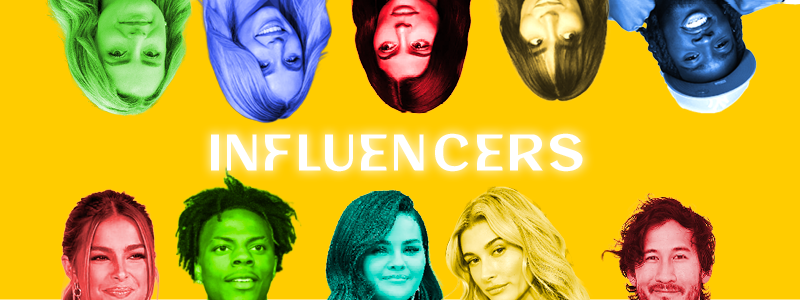
Here are some of the most popular influencers across platforms for young people.
TikTok influencers
TikTok is an endless stream of short-form content perfectly tailored to your teen. You can expect their feed to be unique to them, and full of personality, relatability and trends. Get Ready With Me (GRWM) content or “Let’s FaceTime” style videos (sharing personal details as if you were on the phone with a friend) quickly make viewers feel like friends.
- Addison Rae (88.2M) – TikTok dancer turned pop singer
- Brooke Monk (45.2M) – fun, relatable young adult lifestyle videos
- Alix Earle (8.3M) – casual “get ready with me” makeup routines and lifestyle content
- Emilie Kiser (5.1M) – fashion and lifestyle vlogger
- Amelia Dimoldenberg (4.1M) – quirky celebrity interview host
- Jake Shane (3.9M) – humorous therapy‑style podcast host
- Alex Cooper (3M) – bold celebrity interview podcast host
YouTube influencers
YouTube is popular for teens, with nine-in-ten saying they use the platform. It’s more popular overall than TikTok, Snapchat and Instagram, according to Pew Research. You can find videos under every topic under the sun on YouTube, but the most popular creators make celebrity-interview content, challenge videos, vlog their lives, or stream their gameplay.
- MrBeast (469M) – large‑scale challenge videos; sometimes plays Minecraft
- Markiplier (38.5M) – energetic, talkative gamer; often plays horror games like Five Nights at Freddy’s
- Jacksepticeye (31.1M) – high‑energy, humorous gamer; plays popular story and action games
- Emma Chamberlain (12M) – casual lifestyle vlogs and chats
- Sean Evans (15.3M) – celebrity interviews
- AlishaMarie (7.9M) – fashion and lifestyle vlogger
Instagram influencers
Instagram used to be for younger adults primarily, but now grandmas and tweens alike post on the platform regularly. While TikTok and YouTube tend to feel a bit more anonymous to post on, teens typically know most of the people they follow on Instagram from church, school or sports teams. The Jenners, Kardashians, and Mrs. Hailey Bieber dominate the platform, influencing the “clean girl” aesthetic that spread on social media in 2025. Other big players are traditional wives, or tradwives, who make content about their families, farms, cooking and homemaking.
- Selena Gomez (415M) – singer and actress; runs a popular makeup and skincare company. She is the most-followed woman on the platform, ranking #4 in most followers overall
- Kylie Jenner (391M) – reality‑TV personality who runs a skincare and makeup company
- Kendall Jenner (284M) – fashion model and reality TV personality; co‑owns a tequila alcohol brand
- Hailey Bieber (55.7M) – fashion model and internet personality; founder of a skincare and makeup brand
- Ballerina Farm (10.3M) – a former ballerina who makes content around her traditional farm, cooking, and family life
- Nara Smith (4.8M) – young mom who posts traditional‑style home, cooking, and family content
Twitch influencers
By far the least filtered of the platforms influencers monetize, this is the platform most parents know the least about. Twitch is a live-streaming platform for gaming and social content, requiring parental consent for users under 18 to create an account. This platform can also have quite a bit of crude humor, unmoderated swearing, and other mature content. Kai Cenant is one of the most popular streamers on the platform right now, with content ranging from long, unscripted chats to gameplay.
- Kai Cenat (20M) – social, talk‑focused entertainer; sometimes plays Red Dead Redemption 2 or other big titles
- IShowSpeed (3.4M) – very loud, unpredictable entertainer; known for his popular travel streams and Fortnite plays
- TheBurntPeanut (2.1M) – Popular vtuber (meaning he plays with an avatar instead of showing his face) who plays shooters, like Arc Raiders and Escape from Tarkov
- HasanAbi (3.1M) – real name Hasan Piker; political news talk host who occasionally livestreams gameplay
Asmongold (190k) – longtime fantasy online‑game player; best known for World of Warcraft

Why do teens want to be influencers?
Teens see influencers on their social media pages every day and, from the outside, the job looks simple and glamorous. You get sent free clothes, makeup, and products, and all you have to do is document the life you are already living–seems pretty easy, right?
The idea of getting money and fame just to do what you already enjoy doing—like being such a big Harry Styles fan that he hangs out with you at his concert, making jokes so relatable that Vanity Fair writes about it, or playing your favorite video games so well that 111 million people take notice—is one of the most attractive parts of beings an influencer.
Plus, in an unsteady job market, teens see influencing it as a way to be an entrepreneur, with so many influencers going on to open additional businesses after gaining success online. You can be your own boss, work whatever hours you want, and you can make a lot, a lot, of money.
It’s like a lottery ticket where you can increase your chances of winning by being funny/attractive/talented enough. It’s not that teenagers don’t see the potential for failure; it’s that every day their screens are filled with people taking off and flying high.
According to a 2023 Morning Consult survey of 1,000 Gen Zers 13-26, 57 percent of them said they want to be influencers. Nearly half of adults in an additional survey— 41 percent— would choose the career as well. It is a coveted career across generations.
CONVERSATION STARTERS
Does the job of being an influencer appeal to you or any of your friends? If you got to choose what free products you got sent as an influencer, what would you pick?What is an influencer?
Gen Z often prefers influencers over traditional celebrities because of their level of interaction and relatability.
Celebrities and influencers are not mutually exclusive; influencers can become celebrities, and celebrities can become influencers—or it may be impossible to tell which one they were at first. In fact, nowadays, people often become celebrities only because they already have a large online presence. Media companies tend to choose to hire the singers/actors/athletes who will bring fans with them over those who are virtually unknown. For this reason, many people feel the need to begin cultivating their “brand” or persona at younger and younger ages.
Influencers also face pressure to conform to a certain image because
of their fans and/or sponsors, who are essentially their livelihood. There’s also the reality that the internet can be a very cruel place. Anyone who is a public figure online is under constant scrutiny, with people waiting to pounce on anything that could potentially be controversial (like this young woman who became the subject of a TikTok drama after she brought home a sofa she found on the sidewalk). Everything about their personal life, even things they don’t share online, has the potential to become public fodder.
CONVERSATION STARTERS
What do you think about parasocial relationships–do you have any? What is the silliest thing you have seen somebody get flak online for doing?
Where did influencers come from?
Advertising and marketing have changed significantly over the past few hundred years, with influencers slowly emerging thanks to the Internet, social media, and the need for companies to find ways around ad-blocking software (which targets traditional online banner ads). In the middle of all this change, marketers learned that young people trust product endorsements by people they feel like they know (influencers) more than they trust them from people who feel separate and different (celebrities).
Companies love influencers because they introduce products directly to customers. An influencer may have fewer followers than a celebrity, but their audience is engaged and invested. One Forbes article explains that using influencers in marketing strategies costs a lot less than contracting big celebrity names—companies can hire multiple influencers “for [a] fraction of the cost of a big name.” And much like established public figures, influencers can introduce the product directly to a company’s desired audience.
The idea of being an influencer arose when everyday people realized that social media had effectively democratized fame, taking the power away from large corporations and media conglomerates and putting it in their hands. Anyone who wanted to get famous could do be. From early-day YouTubers like Jenna Marbles and Smosh to current big names like Jake Shane and Alix Earle, influencers have evolved in their ability to attract sponsors and monetize their content while still appearing relatable and attainable.
What makes today’s influencers interesting, and what sets them apart from the influencers who enjoyed fame when social media was still in its infancy, is the blurred lines between their lives, their fame, and their jobs. For many influencers, their platform includes their relationships, their habits, and their sense of humor, and requires that viewers be brought into their worlds for the content to make sense.
When you get the most traction on the videos you make from your bed or right after you go on a date, your ability to get paid is inextricably linked to that behavior. Essentially, privacy is punished, and disclosure is rewarded. In this way, the modern influencer must reveal all to achieve success, something a pre-Internet generation would have seen as an unthinkable sacrifice.
CONVERSATION STARTERS
How have you seen the internet change over the years? How do you think social media culture impacts people online and off?How do I talk to my teen about influencers?
Whether your teen wants to be an influencer or not, this is a conversation that’s important to have because influencers exist in their world. If a teen is on social media, they probably follow some, and they might know other teens who are serious about pursuing a social media career.
A good way to kick off this conversation is by asking your teen what influencers they have noticed on social media. Be curious about what your teens engage with, who they think is worth following, and why. If your teen does follow any influencers, get acquainted with their content on your own time so you can enter into any conversations well-equipped and educated.
CONVERSATION STARTERS
If you were to become an influencer, is there a line you wouldn’t be willing to cross, even if it could help build your brand or make money? How do you define success? What would it take for you to consider yourself successful?
What does the Bible say about influencers?
When we look at the stories told throughout Judges, 1 & 2 Samuel, and 1 & 2 Kings, we get a clear picture of how powerful influence can be.
Before the time of the judges, Joshua had been a leader for the Israelites, one who devoted himself to following the Lord, obeying His commands, and not allowing himself to be influenced by the surrounding cultures. During his leadership, the Israelites also followed God, but after he died, the Israelites slowly forgot about all that God had done for them (rescued them from Egypt, lead them through the wilderness to the Promised Land, etc.), and they “did evil in the eyes of the Lord” (Judges 3:7).
Scripture tells us that God’s anger burned against them, so He allowed their enemies to prevail. Eventually, they cried out to Him for deliverance, and He provided a judge to lead them in battle. For a time, they followed God again. But time and time again, they strayed, needed rescuing, cried out to God, were given a leader, returned to God, then strayed again.
As this video from the Bible Project points out, the many judges who ruled over the Israelites during this time varied in their devotion to God. And it’s clear that the worse the ruler was, the more God’s people strayed. Their influence made a tremendous difference. What’s also worth noting is that, after a while, the Israelites still weren’t satisfied, asking God why the other nations had kings, and they didn’t.
God told Samuel that the people were not rejecting Samuel by asking for a king—they were rejecting God as their ultimate King (1 Samuel 8:4-9). He was the Israelites’ leader, and they were His special people, set apart for His glory. Instead of embracing their identity, the Israelites looked at what everyone else had and wanted that instead. They were discontent because they thought others had it better.
No one should have more influence on what we love, desire, pursue, hope for, and believe than God Himself. If anyone else holds this power in our lives, we will be led astray. These Old Testament records illuminate just how much responsibility and power a leader or influencer has. It’s no small task to be in such a position, and we are responsible for how we guide, teach, and influence others (James 3:1).
CONVERSATION STARTERS
What influences have you had in your life that drew you close to God? What are some that didn’t?Can Christians be influencers?
A part of being a Christian is being an influencer. Except that, more than anything else, we are not trying to influence people to buy products or become more like us, we want to point them to something greater than ourselves: Jesus. While there are Christian influencers on the platform (we even have one on our publishing team), scripture tells us that those who teach are held to a higher standard, which means we should not volunteer ourselves for the job unless we feel God calling us to. That takes discernment, which means carefully listening and considering with God and our communities.
CONVERSATION STARTERS
Do you follow any Christian influencers? If so, how have they shaped your faith? What are some of the pros and cons of Christian influencers?Discussion Questions
-
Does the job of being an influencer appeal to you or any of your friends?
-
If you got to choose what free products you got sent as an influencer, what would you pick?
-
What do you think about parasocial relationships–do you have any?
-
What is the silliest thing you have seen somebody get flak online for doing?
-
If you were to become an influencer, is there a line you wouldn’t be willing to cross, even if it could help build your brand or make money?
-
Do you follow any Christian influencers? If so, how have they shaped your faith?
-
What are some of the pros and cons of Christian influencers?
Reflection Questions
-
How have you seen the internet change over the years?
-
How do you think social media culture impacts people online and off?
-
How do you define success? What would it take for you to consider yourself successful?
-
What influences have you had in your life that drew you close to God? What are some that didn’t?
Sources
-
eConsultancy
https://econsultancy.com/the-three-biggest-challenges-in-influencer-marketing/ -
Statista
https://www.statista.com/statistics/259477/hours-of-video-uploaded-to-youtube-every-minute/ -
Social Media Today
https://www.socialmediatoday.com/marketing/how-much-time-do-people-spend-social-media-infographic -
Pew Research
https://www.pewresearch.org/internet/2022/08/10/teens-social-media-and-technology-2022/ -
Market Watch
https://www.marketwatch.com/story/people-are-spending-most-of-their-waking-hours-staring-at-screens-2018-08-01 -
Forbes
https://www.forbes.com/sites/forbesagencycouncil/2018/08/21/are-social-media-influencers-worth-the-investment/?sh=221f763af452 -
Twitter Business
https://business.twitter.com/en/blog/secrets-of-social-media-influencers.html -
ION
https://www.ion.co/millennials-listen-social-media-creators-celebrities -
Think with Google
https://www.thinkwithgoogle.com/marketing-strategies/video/youtube-stars-influence/ -
Nogre
https://nogre.com/evolution-of-influencers/ -
Forbes
https://www.forbes.com/sites/forbesagencycouncil/2017/05/24/fame-as-a-career-choice-and-the-rise-of-micro-influencers/?sh=5d58e39f2cbd -
YouTube
https://www.youtube.com/user/JennaMarbles -
YouTube
https://www.youtube.com/user/SMOSH -
Instagram
https://www.instagram.com/chrisolsen/ -
Instagram
https://www.instagram.com/emmachamberlain/ -
YouTube
https://www.youtube.com/watch?v=Mdm_j2z4Uk0 -
Vanity Fair
https://www.vanityfair.com/style/2023/08/delaney-rowe-tiktok -
YouTube
https://www.youtube.com/user/pewdiepie -
Vox
https://www.vox.com/the-goods/2022/8/31/23328677/kid-influencer-ryans-world-ellie-zeiler -
Surface Magazine
https://www.surfacemag.com/articles/blue-tiktok-couch-drama-explained/ -
The Guardian
https://www.theguardian.com/technology/2018/jul/22/what-would-you-do-if-your-teenager-became-an-overnight-instagram-sensation- -
YouTube
https://www.youtube.com/watch?app=desktop&v=kOYy8iCfIJ4 -
BibleGateway
https://www.biblegateway.com/passage/?search=1+Samuel+16%3A7&version=NIV